



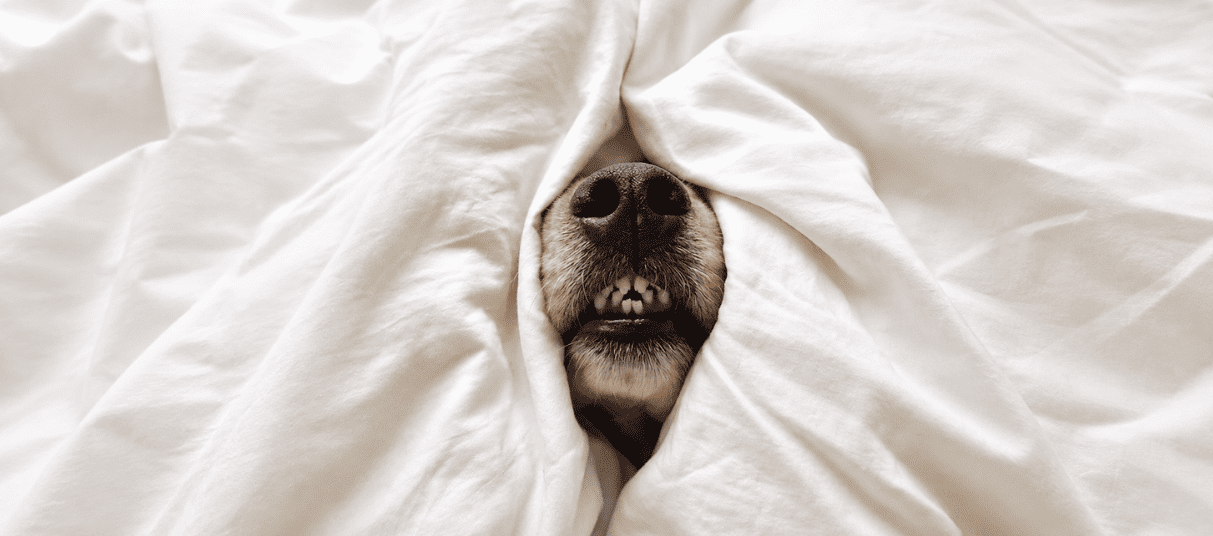
While humans mainly use sight to investigate their surroundings, dogs use their sense of smell to “read” stories and information. Research has shown that dogs can distinguish remarkably small concentrations of certain odours, as their nasal system contains hundreds of millions of olfactory receptor cells. They can detect certain compounds at parts per trillion, equivalent to tasting about a quarter teaspoon of sugar dissolved in an Olympic-sized swimming pool. While we can smell soup, dogs can detect every ingredient in the recipe, according to some experts. Researchers say that dogs can use their sense of smell to detect the age, gender, and mood of other dogs, and can even be trained to detect explosives and illegal drugs.
Compounds Of A Dog’s Nose
Dampness on a dog’s nose helps it to better capture scent particles. They have two airways, one for breathing, and another for smelling. When they sniff, air is directed to the part of the nasal cavity that contains scent receptors. The air being exhaled leaves through the sides of the nostrils rather than directly back through the same pathway, allowing the dog to sample new scents with successive sniffs. A dog’s olfactory region can measure 130 square centimeters or more, whereas a human’s measures only 5 square centimeters. Inside the nasal cavity is a complicated arrangement of fine, scroll-like structures called turbinates, which provide a large surface area for the air carrying scent molecules to pass over.
This is why allowing a dog time to sniff during a walk matters. Every tree, patch of grass, gatepost and passing animal carries a collection of scents that provides information to dogs. Research into canine olfaction has shown that scent is closely connected with recognition and memory, and brain-imaging research found that dogs responded particularly strongly to the scent of a familiar person even when that person was not physically present. Detection dogs take this ability much further, with specialised training enabling them to locate human remains and particular odours associated with medical conditions. Scent-based games, searching for hidden treats and allowing time for natural sniffing outdoors can give a dog an opportunity to use one of their most developed senses. Once this is understood, a dog pausing to sniff no longer looks like a distraction from the walk. It is one of the principal ways the dog experiences and makes sense of the world.
A dog’s sense of smell is more than just an impressive biological ability. It shapes the way a dog understands their surroundings, recognises familiar people and animals, explores new places and responds to the world around it. Understanding this extraordinary ability brings a new perspective to those special moments on walks that make sharing life with a dog so rewarding.
To Nurture is Nature 🌿
🩵 Instagram: @chateauhomeandpetcare
🩵 Facebook: chateauhomeandpetcare