



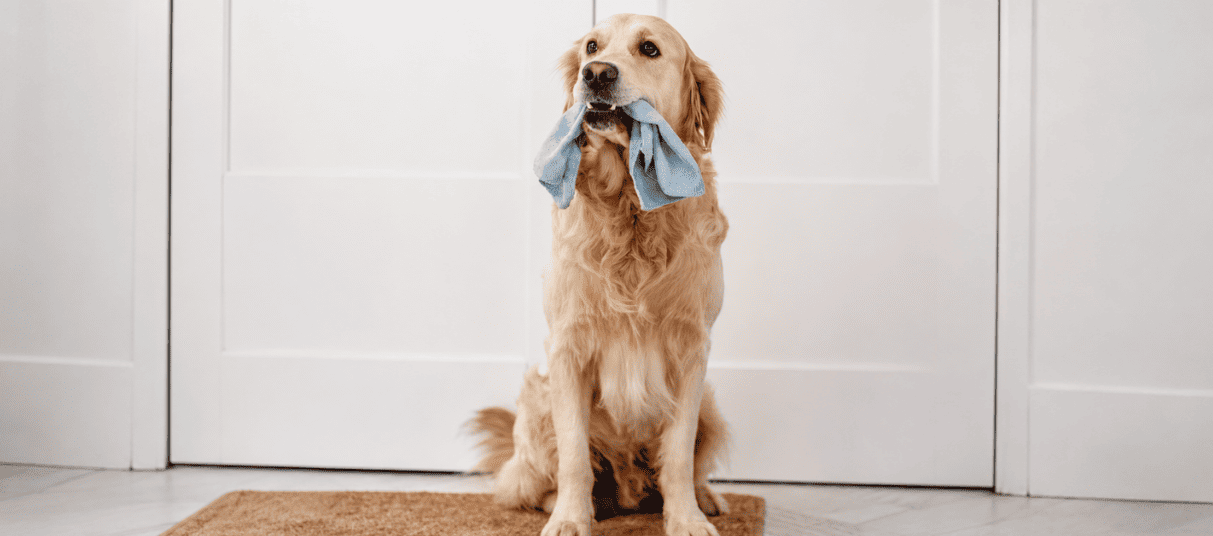
A dog stretches out across the lounge floor after an evening walk. A cat claims the only patch of sunlight near the window. Unlike us, pets experience their surroundings up close. They explore with their noses, paws, feathers and fur. So it is no surprise that people ask what goes into the cleaning products they use around their pets in the home.
An eco-friendly product is designed with its environmental footprint in mind. This includes the sourcing of raw materials, how quickly ingredients biodegrade after use, whether packaging can be recycled, and how much energy is required during manufacturing. A pet-friendly product, on the other hand, is evaluated by how that product is likely to affect the animals living within the home during normal, everyday use. Natural and non-toxic are not interchangeable terms. Nature provides many substances that clean effectively, but it also produces compounds that require thoughtful handling.
Superstores offer an ever-growing range of biodegradable eco-friendly cleaning alternatives promising a cleaner home with a lighter environmental footprint. An online search reveals countless articles warning against certain ingredients, promoting homemade alternatives or claiming that one product is safer than another. While some of this advice is well founded, much of it lacks context. A common misunderstanding is that a product labelled as eco-friendly is the safest option. Every cleaning product, even those derived from plants, relies on chemistry to do its job. Some break down grease, others lift dirt, while disinfectants are designed to reduce harmful microorganisms. What matters is how it’s formulated, how it’s diluted, and how it’s applied. A well-maintained home does not need to smell strongly of perfumes or disinfectants to be clean. Good ventilation and carefully chosen products achieve noticeable long-term results.
Hazards & Risks
Water alone can remove some dirt, but stubborn grease, dried food residue, soap scum and organic matter require ingredients that break down oils, lift particles and eliminate unwanted microorganisms. In toxicology, there is a difference between hazard and risk. A hazard refers to something that has the potential to cause harm under certain conditions. Risk considers the likelihood of that harm occurring based on how the product is actually used. Take concentrated floor cleaner as an example, inside the bottle, the ingredients are designed to be diluted before use. Once mixed correctly with water, the level of exposure changes, but the product itself has not changed.
Many natural substances have excellent cleaning properties. Vinegar can dissolve mineral deposits and bicarbonate of soda is useful for lifting odours. At the same time, nature also produces highly concentrated compounds that are unsuitable for animals. Some essential oils, for example, are valued for their fragrance but are not appropriate for use around pets, especially in enclosed spaces.
Reading the ingredients list may seem daunting, particularly when unfamiliar names appear on the label. In reality, most ingredients have surprisingly simple jobs. Some help water spread evenly across a surface. Others suspend dirt so it can be rinsed away. Some prevent streaking. Others preserve the stability of the product during storage. Once you understand what each ingredient does, ingredient lists become far less intimidating.
Cleaning Safely Around Pets
Keeping the home hygienic is part of responsible pet ownership. Feeding stations should be kept sanitary. Pet bedding, toys and crates all require regular cleaning to prevent the build-up of dirt, bacteria and odours. Remember, a dog may spend the afternoon lying on the freshly cleaned floor and then lick its paws. A cat may rub against recently cleaned furniture before cleaning its coat. This is especially worthwhile with curious puppies, kittens and birds, which are more likely to investigate freshly cleaned surfaces. To reduce unnecessary exposure you can clean when pets are comfortable in another area of the home, until surfaces have dried completely and the room has been well-ventilated.
Pet bedding deserves particular attention, as these collect more than just loose hair. Natural body oils, dust, moisture and microscopic debris gradually build up within the fibres. Regular washing not only keeps bedding fresh but also helps maintain a healthier sleeping environment. The same applies to toys, collars, harnesses and leads. These items accompany pets through parks, pavements, gardens and muddy trails. They are often handled daily but are surprisingly easy to overlook during routine cleaning.
Food bowls and water dishes should be cleaned thoroughly. Plastic food containers can gradually develop a thin bacterial biofilm if they are not cleaned regularly. Dry food naturally produces fine dust and small crumbs, so keeping these spaces clean discourages pests and preserves food quality. A washable mat near the back door or a designated place for wiping paws before coming inside can prevent surprising amounts of dirt from travelling through the house. These simple habits reduce cleaning indoors while helping protect flooring and rugs from unnecessary wear.
Cleaning Ingredients to Look Out For
Turn any bottle of household cleaner around and you’ll find an ingredient list that appears more suited to a chemistry textbook than a kitchen cupboard. Long scientific names, unfamiliar terminology and technical descriptions can make the simplest cleaning product feel complicated. Every cleaning product is a carefully balanced formula, with each component performing a specific job.
Surfactants
Surfactants are the compounds responsible for breaking the bond between dirt, grease and the surface beneath it. Water alone struggles to remove oily residues because oil naturally repels water. Surfactants act like tiny bridges between oil and water, allowing grime to be lifted away and rinsed off. Many modern household cleaners use biodegradable surfactants derived partly from plant-based sources such as coconut or corn. Others are synthetically produced but designed to break down efficiently after use. Sodium Laureth Sulfate (SLES) is found in floor cleaners, dishwashing liquids and multipurpose sprays. Alkyl Polyglucosides (APGs) are often listed as Decyl Glucoside, Lauryl Glucoside or Coco Glucoside. These are plant-derived, biodegradable surfactants commonly found in eco-friendly products and are generally considered among the more pet-friendly options.
Enzymes
Enzyme-based cleaners are incredibly popular, particularly in homes with dogs and cats. Unlike traditional cleaners that rely primarily on detergents, enzymes work by breaking down the organic material responsible for many common household stains and odours. Urine, faeces, saliva, vomit and food residues all contain proteins and other biological compounds. Enzymes target these compounds directly, breaking them into much smaller particles that can be removed more completely. Removing the source of the odour rather than masking it reduces the chance of animals returning to the same location repeatedly. Protease breaks down proteins, Amylase breaks down starches, Lipase breaks down fats and oils, Cellulase helps remove dirt trapped in fabric fibres and Mannanase targets food stains from sauces and gums. Unlike bleach, enzyme cleaners continue working for some time after application provided the surface remains damp. Enzyme cleaners are considered some of the most pet-friendly cleaning options.
Fragrances
Lemon, lavender, pine and floral fragrances have been used for decades to create the impression of a freshly cleaned home. However, fragrance contributes very little to the cleaning process. Its primary purpose is to influence how a room smells once cleaning has been completed. Highly fragranced products are not automatically unsafe, however there are lightly fragranced or fragrance-free alternatives that perform the same cleaning task equally well.
Artificial Colourants
Bright blue bathroom cleaners and vividly coloured multi-purpose sprays often create the impression of strength or freshness, but they are included primarily for product identification, branding or visual appeal.
Alcohols
Alcohols are commonly found in glass cleaners, disinfecting sprays and surface sanitisers because they evaporate quickly and leave very little residue. Isopropyl Alcohol and Propanol are very common in disinfectants and glass cleaners. Ethanol is used in disinfectants and sanitising sprays. Benzyl Alcohol often functions as both a preservative and solvent. They help remove grease, improve drying time and support disinfection. When applied and allowed to evaporate fully, alcohol-based products are considered suitable for use in homes with pets. Problems arise from direct ingestion of concentrated products.
Hydrogen Peroxide
It is used to remove stains, brighten surfaces and reduce microorganisms, depending on the concentration. Hydrogen peroxide gradually breaks down into water and oxygen, leaving very little chemical residue behind. Household cleaning products generally contain low concentrations (around 3%), which differ greatly from industrial-strength formulations. It is regarded as a suitable option for many pet-owning households.
Bleach
Bleach, Sodium Hypochlorite, remains one of the most effective disinfectants available and is widely used in healthcare settings, food preparation environments and many commercial cleaning applications because of its ability to reduce a broad range of microorganisms. Bleach should always be diluted according to the manufacturer’s instructions, used in well-ventilated areas and never mixed with products containing ammonia or acidic ingredients such as vinegar or rubbing alcohol, as these combinations can produce hazardous gases.
Vinegar & Bicarbonate of Soda
Vinegar is mildly acidic, making it useful for dissolving mineral deposits, soap residue and hard water marks. It works particularly well on glass, taps and certain bathroom surfaces. However, waxed timber floors, or natural stone surfaces such as marble, travertine, limestone and some granites can be damaged by repeated exposure to acidic cleaners, gradually dulling or etching the finish.
Bicarbonate of soda is mildly alkaline, and is particularly effective at absorbing odours, lifting light stains and providing gentle abrasive action where a little extra cleaning power is needed.
DIY Cleaning Solutions
A homemade cleaner should never be expected to replace every commercial disinfectant or tackle every cleaning challenge. Instead, these recipes work best as part of an overall cleaning routine, particularly for day-to-day maintenance where heavy-duty products simply are not necessary.
One of the most versatile homemade cleaners begins with warm water, white vinegar and a small amount of unscented dishwashing liquid. These create an effective cleaner for glass, mirrors, sealed tiles, stainless steel fittings and many kitchen and bathroom surfaces. The vinegar helps dissolve mineral deposits and soap residue, while the dishwashing liquid lifts grease and everyday dirt that water alone would struggle to remove. The solution can be applied using a reusable spray bottle and microfibre cloth before being wiped dry with a clean cloth to reduce streaking.
A light sprinkling of Bicarbonate of soda over fabric surfaces, left for twenty to thirty minutes before vacuuming, can noticeably freshen areas where pets spend much of their time. It is a simple method that avoids overpowering fragrances while helping maintain a cleaner indoor environment. When mixed with a small amount of water, bicarbonate of soda also forms a mild cleaning paste suitable for lifting marks from sinks, ceramic surfaces and grout. Unlike abrasive scouring powders, the fine particles provide enough cleaning action for many household tasks without unnecessarily scratching most hard surfaces.
On Stainless Steel objects, fingerprints and everyday grime can be removed using warm water and a few drops of mild dishwashing liquid. After drying the surface, apply a very small amount of food-grade mineral oil to a clean microfibre cloth and wipe in the direction of the grain, as this restores an even finish without leaving an oily residue.
Light surface rust on garden tools, metal fittings or old hardware can often be removed using ordinary white vinegar. Submerge the item in white vinegar for several hours, or overnight if the rust is more established. Once soaked, scrub gently with a soft brush or fine steel wool before rinsing thoroughly with clean water and drying immediately. Drying immediately prevents flash rusting. A light coat of mineral oil afterwards helps reduce future rust formation. This method is intended for solid metal items only and should not be used on delicate plated finishes or valuable antiques without first checking the manufacturer’s recommendations
Wooden chopping boards benefit from occasional deep cleaning using coarse salt and half a fresh lemon. The salt provides gentle abrasion while the citric acid helps lift stains and food residue. Rinse with warm water and allow the board to dry completely in an upright position before storing.
To descale hard water deposits inside kettles, fill halfway with equal parts white vinegar and water, bring it almost to the boil, switch it off and allow it to stand for around thirty minutes before rinsing thoroughly several times with clean water. For taps and shower heads, soak a cloth in the same solution, wrap it around the affected area and leave it for twenty to thirty minutes before wiping clean. The mild acetic acid dissolves calcium carbonate deposits without the need for aggressive scrubbing.
Place a microwave-safe bowl containing one cup of water and several slices of fresh lemon inside the microwave or airfryer. Heat on high for three to five minutes, then leave the door closed for a further five minutes. The steam softens dried food residue, while the lemon helps loosen grease and leaves a fresh scent. Most marks can then be wiped away easily with a damp microfibre cloth.
Homes shared with pets are meant to look lived in. Some are filled with muddy paw prints after a morning walk. These moments are what make a house feel lived in, and keeping those shared spaces clean is a part of caring for everyone who calls them home. Reading ingredient labels, following dilution instructions, allowing surfaces to dry properly and storing products responsibly go a long way towards day-to-day safety. Small habits, repeated over time, have a remarkable way of keeping a home fresh, hygienic and welcoming without unnecessary effort. With the right products and a few sensible habits, keeping a home clean, welcoming and safe for both people and pets becomes far more straightforward than many people expect.
To Nurture is Nature 🌿
🩵 Instagram: @chateauhomeandpetcare
🩵 Facebook: chateauhomeandpetcare