



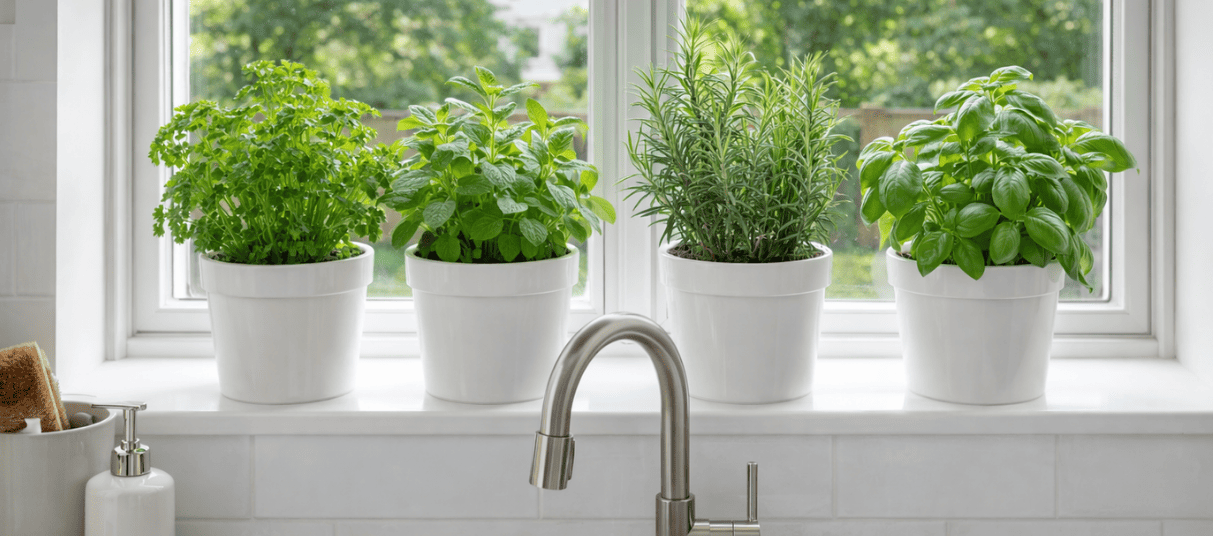
Imagine reaching across your kitchen counter to pick a few fresh basil leaves for your homemade pasta, or to snip thyme straight off the branch for your slow-cooked stew. This transforms your cooking into a personal experience. The ingredients have not travelled hundreds of kilometres or spent days sealed in plastic packaging. They have been growing in your home, becoming part of your everyday routine.
As people search for practical ways to live sustainably and reconnect with nature, growing herbs is the ideal starting point. They require very little space, they yield rich rewards, and they bring colour, texture and fragrance into the home, throughout the year. Whether they sit on your sunny kitchen windowsill, brighten the apartment balcony or line open shelving near the dining area, herbs have a remarkable way of making a home feel more welcoming.
Many herbs adapt exceptionally well to growing in containers. Basil, thyme, parsley, coriander, mint, rosemary, oregano, sage, chives, dill, lemon balm and even bay can all thrive in pots when provided with the right balance of light, moisture and care. Some are better suited to beginners, while others require extra attention. Instead of following a set schedule, you’ll recognise how each plant responds and adjust your care accordingly.
The Indoor Environment
Most culinary herbs, in nature, are grown in climates where sunlight is plentiful, rainfall is seasonal and the soil drains freely. Most herbs flourish when they receive between six and eight hours of bright light each day. Plants naturally grow towards their light source, a response known as phototropism. If a pot remains in the same position for weeks, the stems may gradually lean towards the window, creating uneven growth. Rotating pots every few days encourages plants to develop more evenly and helps prevent one side from becoming sparse.
Herbs benefit from containers with drainage holes to allow excess water to escape freely. Without this, water accumulates around the roots, limiting the oxygen and creating conditions where root disease can develop. Terracotta pots are extremely popular for this, as their porous walls allow moisture to evaporate gradually, helping the potting mix dry more evenly between waterings. Garden soil should never be used indoors. It becomes compacted inside the pots, restricting drainage. It may also introduce weed seeds, insects or soil-borne diseases. A high-quality potting mix designed for indoor containers is formulated to remain light and free-draining. To improve drainage further, incorporate a small amount of coarse sand or perlite into your potting mix.
Many assume plants should be watered according to a fixed schedule, however the amount of water a plant requires changes with the seasons, room temperature, humidity, and pot size. Placing a finger a few centimetres into the potting mix reveals if the soil is still damp. It is then best to wait another day or two before watering. When watering, the water should seep deeply and begin draining from the bottom of the pot, to encourage roots to grow deeper. Emptying excess water from the saucers afterwards prevents the roots from sitting in standing water for extended periods.
Fresh potting mixes contain enough nutrients for the first few weeks, but once they begins to diminish, a balanced liquid fertiliser should be applied at half the recommended strength every three to four weeks during active growth. Regular harvesting encourages herbs to produce fresh side shoots, creating fuller and more productive plants over time. Growing herbs from seed offers a wider range of varieties than those commonly available in nurseries. It is also an economical option for those hoping to grow several plants at once. However it requires much patience, as seeds require time, consistent moisture and suitable temperatures before they become productive. Established nursery plants provide a head start. They are already well developed and can usually be harvested within a short time.
Basil
Its bright green leaves, distinctive aroma and remarkable versatility have made it one of the most widely grown culinary herbs in the world. Whether scattered over a freshly baked pizza, blended into homemade pesto or added to a summer salad, basil has a way of elevating simple ingredients without overpowering them. Basil originates from warm tropical and subtropical regions, where long hours of sunshine and consistently warm temperatures encourage rapid growth. A bright windowsill is the best place for basil to flourish. Given enough light, the plant develops sturdy stems, broad leaves and a rich green colour that reflects healthy growth. Yellowing leaves are often associated with overwatering or poor drainage, while pale, elongated growth usually indicates insufficient light. Brown leaf edges may develop if the soil repeatedly dries out, particularly during warmer weather.
Allowing the potting mix to dry completely places unnecessary stress on the plant, while constantly wet soil restricts oxygen around the roots. When you pinch the growing tip just above a pair of healthy leaves, within days, new side shoots begin developing from these leaf joints, creating two new stems where there was once only one. As small flower spikes form, the plant shifts to producing seed. While the flowers themselves are attractive and highly valued by pollinating insects outdoors, indoor gardeners often remove them as soon as they appear. This helps direct the plant’s energy into producing leaves rather than seeds. Sweet basil is most commonly grown in kitchens, but gardeners also explore lemon basil, which carries bright citrus notes, cinnamon basil with its warm spice-like aroma, purple basil with its striking foliage, and Greek basil, whose smaller leaves make it particularly well suited to container growing. Basil leaves naturally contain vitamin K, vitamin A and vitamin C, along with minerals such as manganese and calcium.
Thyme
Wild thyme naturally grows alongside rocky hills, open grasslands and sun-drenched landscapes where rainfall is unpredictable and the soil drains quickly. Bright sunlight is essential. A position close to a sunny window encourages compact growth and a stronger concentration of fragrant oils that give thyme its unmistakable aroma. Unlike basil, thyme is perfectly comfortable allowing the soil to dry between waterings.
Young stems can be clipped whenever they are needed, provided no more than a third of the plant is removed at one time. Regular harvesting encourages fresh branching and prevents older stems from becoming overly woody. Lemon thyme introduces bright citrus notes that pair particularly well with fish, poultry and roasted vegetables, while creeping thyme, although more often grown outdoors, can also thrive in shallow containers. Its leaves naturally contain compounds such as thymol and carvacrol, both of which have been extensively studied for their aromatic and antimicrobial properties.
Mint
Placed in suitable conditions and it wastes no time making itself at home. Mint naturally grows in places where moisture is readily available, along stream banks, woodland edges and damp meadows. Whenever possible, give mint its own pot. When planted alongside slower-growing herbs, mint’s extensive root system will gradually compete for water, nutrients and space. In outdoor gardens it is well known for spreading beyond the original planting area. A dedicated pot allows the plant to develop freely without overwhelming its neighbours.
It will tolerate a little more shade than basil or thyme, although prolonged low light can lead to longer stems and smaller leaves. Allowing the soil to dry out completely often causes the leaves to wilt. Healthy mint responds remarkably well to regular harvesting. If left untrimmed for long periods, old stems can become elongated and less productive.
The small clusters of white, pink or pale purple flowers are attractive and valuable to pollinating insects when grown outdoors, but indoors many gardeners choose to remove them early. Spearmint is associated with mint sauces and herbal teas. Peppermint contains a higher concentration of menthol, popular in desserts and beverages. Apple mint produces softly textured leaves with a milder taste. Mint has modest amounts of vitamins A and C, together with naturally occurring antioxidants. Fresh mint leaves can be infused in hot water for herbal tea, added to chilled water with slices of citrus, or incorporated into homemade fruit salads, sauces and desserts.
Parsley
Often treated as a finishing garnish, fresh leaves brighten salads, enrich soups, complement roasted vegetables and bring balance to countless everyday meals. Although parsley is widely regarded as a herb, it belongs to the carrot family, a group of plants known for their rich green foliage and naturally deep root systems. This explains why parsley often benefits from a slightly deeper container than many other herbs. Unlike thyme, which enjoys drying out between waterings, parsley responds best to consistent moisture. Allowing the potting mix to dry completely may slow growth and cause the outer leaves to yellow prematurely. Growing parsley from seed requires a little patience. The seeds germinate slowly because of compounds within the seed coat that delay the absorption of water.
The oldest outer stems should always be picked first, cutting them close to the base of the plant. This allows the younger central shoots to continue developing uninterrupted. Flat-leaf parsley, sometimes known as Italian parsley, is widely favoured for cooking because of its rich flavour and sturdy leaves. Curly parsley offers a more compact appearance with finely textured foliage. Fresh leaves provide excellent amounts of vitamin K, together with vitamin C, vitamin A and folate. They also contain naturally occurring antioxidants and plant compounds that contribute to the herb’s fresh flavour and vibrant colour.
Starting your indoor garden with these four beginner-friendly herbs will be richly rewarding. Meals become more flavourful and there is less environmental waste. It is the small moments that make indoor gardening so satisfying, the patience you learn, the care you give, and the rewards you receive. Knowledge gained through personal application builds confidence, a sense of fulfillment and appreciation. Whether your herb collection eventually fills an entire kitchen or begins with just a single herb, the experience remains the same. You are cultivating a sustainable home connected to nature.
To Nurture is Nature 🌿
🩵 Instagram: @chateauhomeandpetcare
🩵 Facebook: chateauhomeandpetcare