



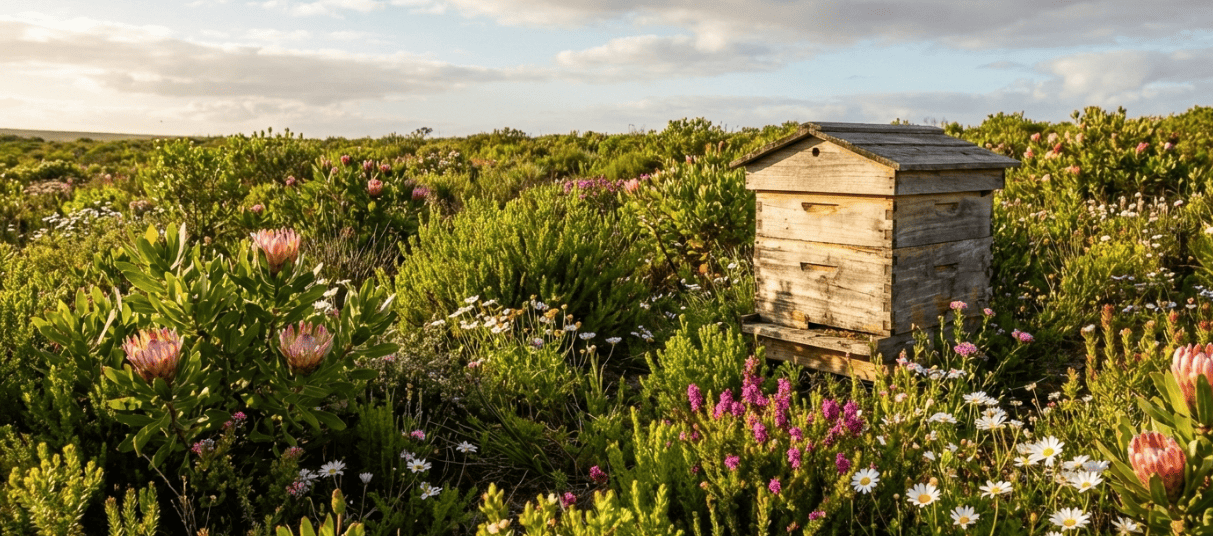
Here, in the Eastern Cape, our climate and diverse flora create ideal conditions for some remarkably industrious creatures, among them bees. Beekeeping is the practice of cultivating honeybee colonies for honey, beeswax and pollination services, as their foraging activities support fruit production, vegetable growth, and the resilience of wild ecosystems. The Eastern Cape fosters a rich mix of fynbos, wildflower species and mixed agricultural landscapes, ideal for African Honey Bees (Apis Mellifera Scutellata) and the Cape Honey Bee (Apis Mellifera Capensis). Whether you are contemplating your first hive or just seeking to deepen your knowledge, this guide will showcase the method of raising bees and explain why this timeless craft remains as relevant and beneficial as ever.
Benefits Of Beekeeping
– Ecological Impact: Honeybees play a vital role in pollination and supporting wild plant reproduction, which is essential for food and agricultural ecosystem resilience.
– Nutritional & Medicinal Value: Locally harvested honey is a nutritious, antioxidant-rich sweetener and traditional medicinal remedy, prized for its antibacterial properties and distinctive floral flavours. Darker honey varieties tend to have higher antioxidant levels than lighter ones, and may contain trace vitamins, minerals, and enzymes beneficial for skin and wound healing. Propolis, a bee resin, has natural antibacterial and anti-inflammatory properties and is used in skincare and wellness products. Beeswax is rich in vitamin A and used in cosmetics, candles, and balms due to its soothing qualities.
– Economic Opportunity: With demand for pure, locally sourced honey and beeswax products on the rise, beekeeping can become a modest income stream. Port Elizabeth and the broader Eastern Cape boast established producers like Menno’s Apiaries, offering inspiration and local market connection.
What Is An Apiary
Successful beekeeping begins with a well-planned apiary. An apiary is the area where you place and manage one or more beehives. When selecting a site, choose one that has abundant nectar and pollen sources within a few kilometres of the hive, as bees typically forage within 3-5 km of their hive, favouring closer sources to conserve energy. Ensure that it has shelter from strong winds, harsh midday sun, and a nearby fresh water source, because bees drink water regularly, especially in warm climates like ours.
Beekeeping Toolkit
– Beehive: The Langstroth design is widely used and highly adaptable for beginners and professionals alike. It features removable frames allowing for efficient honey harvesting and colony inspection. Online stores such as Bee Ware and Bhive Beekeeping Supplies stock complete Langstroth hives, smokers, protective clothing and hive tools with nationwide delivery. Beehives4Africa, Apiarista Bee Farm and Menno’s Bees are local farms and apiaries that provide equipment and guided advice.
– Protective Clothing: Bee suits, gloves, veils, closed shoes and light-coloured long sleeves help minimise stings. African honey bees can be extremely defensive, recommended gear includes a full bee suit or at least a veil and long gloves. Most beekeeping suits and long-sleeved garments are traditionally white or light in colour for both practical and biological reasons. Bees are instinctively more reactive to dark colours, which in nature resemble their primary predators, such as bears and honey badgers, lighter shades are perceived as less threatening and help keep colonies calmer during inspection. The bee suits are also designed to reduce heat buildup, preventing sweaty scents that trigger a defensive response in bees.
Local Associations And Professional Groups
The Mpuma-Koloni Bee Association (MKBA) connects beekeepers nationally and supports advocacy, training and networking, and local Facebook groups often have active beekeeper discussions and informal meetups for hobbyists. Joining these groups will give you access to mentorship, field days, training courses and equipment sharing.
Harvesting Honey
Ensure that the frames are fully capped by worker bees, signifying the honey is mature and stable. Extract honey using a gentle centrifugal extractor to preserve the comb. Always leave adequate honey stores in the hive, particularly in cooler months. During winter, bees cluster for warmth. It is best to avoid unnecessary disturbance and ensure sufficient food reserves. In spring and summer, bee colonies expand as nectar is abundant, making it the perfect time to add additional honey storage boxes. Autumn is the perfect season to harvest surplus honey. For optimal productivity, each beekeeper should adapt such practices to local weather, plant blooming cycles, and individual hive health and behaviour. Honey can be filtered and bottled at room temperature to retain raw characteristics. Heating honey aids bottling but removes its natural essential enzymes. Honey is delicate and complex, made from nectar with sugars such as fructose and glucose. Different flower sources produce different honey flavours, colours, and aromas, and in South Africa, honey flavour profiles can come from fynbos, bluegum, citrus, canola, lucerne, and wildflower mixes.
Honey Flavour Profiles
– Cape Fynbos Honey: In a wild fynbos biome, bees forage on plants such as Erica shrubs, Protea Repens and numerous other delicate blossoms during spring and early summer, producing a deep golden amber honey, layered with herbal, floral tastes, richer in antioxidants than some other honey variants. Its scent is often likened to the Cape mountains right after rainfall.
– Orange Blossom Honey: In spring, bees situated near white citrus blossoms produce a light golden honey that is sweet and floral with citrus notes. Nectar from citrus blossoms carries specific essential oils that bees concentrate into the honey.
– Eucalyptus & Bluegum Honey: Not strictly indigenous, but ubiquitous in Cape provinces. Eucalyptus nectar contains volatile aromatic compounds that bees use to produce soft red honey, with an earthy, medicinal taste. Eucalyptus honey is often used for soothing coughs and respiratory comfort, and works wonderfully in warm teas during the winter months.
– Wildflower Honey: When hives sit amidst veld and fields, bees feed from different wildflowers to produce a pale, sweet floral honey. Each batch has its own unique blend of nectar sugars, volatile oils, and pollen counts.
Beekeeping reveals an organised system built on balance. When we care for bees, we benefit from what nature has to offer and create a sanctuary to support the ecosystem around us. This flourishing relationship between humans and bees creates a lasting bond for generations to come.
To Nurture is Nature 🌿
🩵 Instagram: @chateauhomeandpetcare
🩵 Facebook: chateauhomeandpetcare